Teens Brazilian Jiu-Jitsu (Ages 13–17): A Parent's Guide
Why teenagers get their own class at WDC BJJ, what actually happens in it, and the honest version of the benefits parents hope for — confidence, discipline, fitness, focus — without the sales pitch.
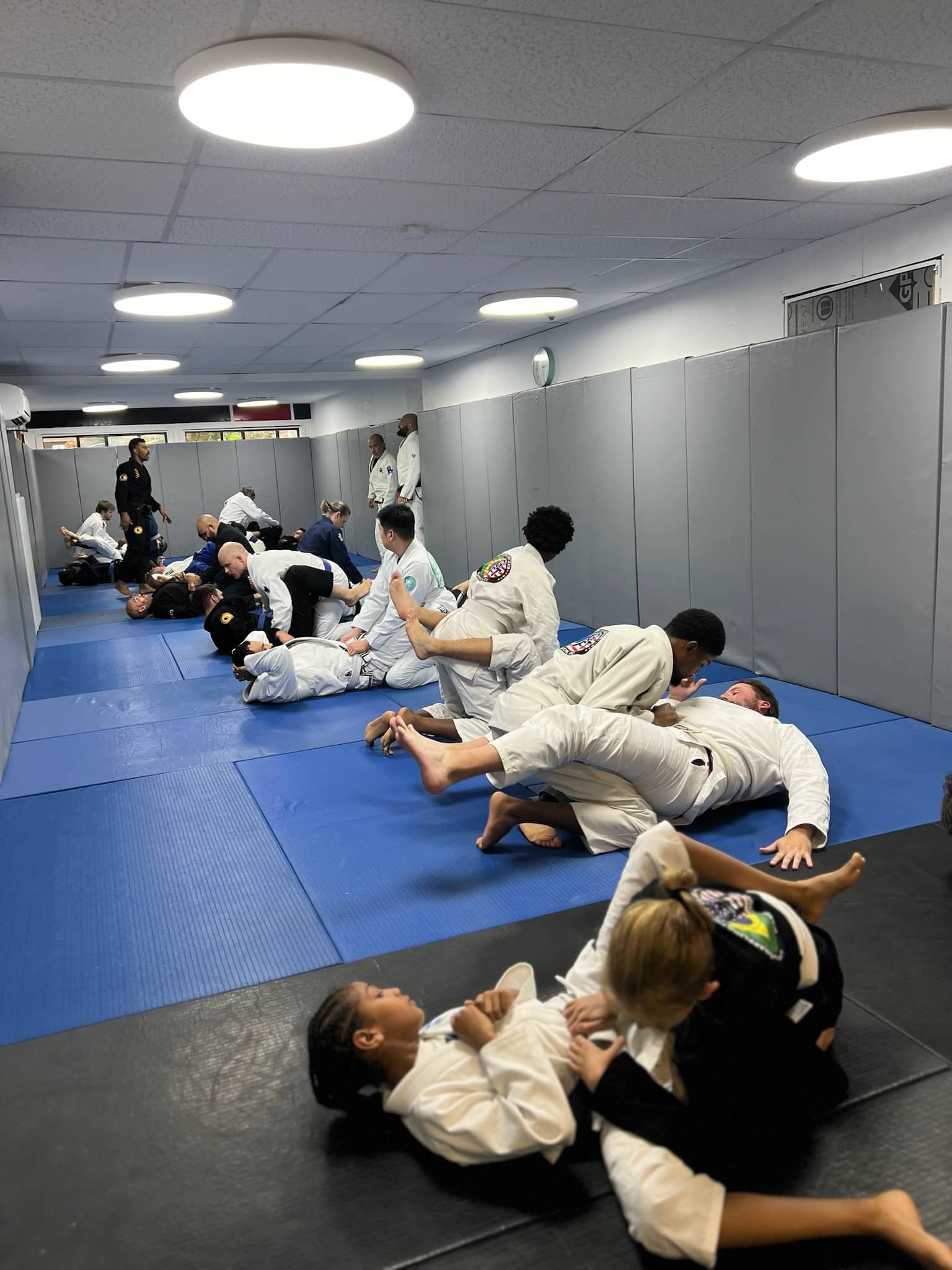
Thirteen to seventeen is an awkward gap in most martial arts schools: too old for the kids' class, not ready to be thrown in with adults. We don't bridge that gap by compromising — teens at WDC BJJ get their own class, for ages 13–17, at our Takoma Park academy, 720 Erie Ave. It runs like a real jiu-jitsu class, because it is one: warm-up, technique taught step by step, partner drilling, and supervised live practice, all with partners their own age and coaches on the floor the entire time. This guide is for the parent deciding whether it's worth a look.
Why a separate teens class matters
A 14-year-old drilling with 8-year-olds learns to go easy; a 14-year-old thrown in with grown adults learns to survive. Neither teaches much jiu-jitsu. With their own group, teens get partners close to their size and stage, technique taught at their pace of understanding — which is fast — and a room where being a beginner is normal because half the room recently was one. The full program is on our teens jiu-jitsu page, with times on the class schedule.
What parents hope for — and what training actually does
Earned, not given
Confidence in jiu-jitsu is not a pep talk — it is the residue of doing hard things against resisting partners and improving at them. Teens feel the difference within weeks: a technique that was impossible in week one works in week four.
Structure they choose
Every class has a shape: show up on time, gear clean, listen, drill, respect your partner. Teens enforce it on each other because the room runs on it. Following a structure you chose lands differently than one imposed on you.
Real exercise, no treadmill
Grappling is full-body work — pushing, pulling, moving under load — disguised as a problem to solve. Screens are off, phones are away, and the workout happens because the game demands it.
A peer group with standards
A training room is a social world with built-in values: show up, be a good partner, help the new kid. For a lot of teenagers, that room becomes the best part of their week.
One honest note: no program can promise outcomes for your child, and you should be suspicious of any that does. What we can promise is the environment — structured classes, close supervision, coaches who pay attention, and a skill worth getting good at. The results grow out of that, at your teen's pace.
Your teen's first class, pictured in advance
Book the free trial
Send the free-trial request or call (202) 636-3453. The trial is a real teens class with real students — parents are welcome to watch the whole thing.
Arrive 15 minutes early
Athletic clothes (no pockets or zippers) and a water bottle. Check in at the door, meet the coaches, and tell us anything we should know — injuries, nerves, a rough year at school. It all helps us coach your teen well.
Train with their group
Warm-up with the class, a technique taught step by step, then drilling with a partner matched by size and experience. Live practice is supervised and scaled — new students are eased in, never fed to the sharks.
Decide together, no pressure
After class we'll answer your questions and your teen's. Enrollment happens in person at the gym when you're ready — membership is never sold online — and the uniform is included free.
School, pressure, and bullying — handled carefully
Some parents find us because of a hard situation at school, so let's be straight about it. We teach teens that the physical skills are the last resort: awareness, distance, voice, and getting to an adult come first, and starting a fight is the fastest way to lose standing in our room. What training does change is how a teenager carries themselves — calm reads differently than fear, and teens who know they can handle a physical moment are less likely to be chosen for one. That is a real effect, and it is still not a promise that bullying stops. If your teen is dealing with something, involve the school, and tell us too. We would rather know.
Gear and getting started
Day one needs nothing but athletic clothes and a water bottle. Enrollment includes a free uniform, and teens train in both gi and no-gi formats as they progress. Younger sibling in the picture? Our kids programs start at age 4 — see the Martial Arts for Kids Guide. Wondering what the first weeks feel like from the student's side? Your First Month of Brazilian Jiu-Jitsu describes it honestly, and the First-Class Guide answers the booking and etiquette questions every family asks.
Your first class is free.
No experience needed, and no contracts or long-term commitment — just come train. Enrollment includes a free uniform for kids, youth, and adults.
1. Send the free-trial request or call us.
2. We confirm the right class for your age and schedule.
3. Arrive 15 minutes early in athletic clothes.
4. Train in a real group class — then decide with zero pressure.
What parents ask us
Yes. Jiu-jitsu does not reward a pre-existing sports background the way team tryouts do — nobody gets cut, nobody sits on a bench, and progress is individual. Teens start at every fitness level, and the structure of class (warm-up, technique, drilling, supervised practice) carries beginners while they build strength and coordination by training.
No. Teens ages 13–17 train in their own class with their own age group. They are too big and strong for the kids' classes and not ready for the adult room, so the teens program is built specifically for where they are — supervised at all times, with partners matched by size and experience.
Jiu-jitsu is a contact sport, and no sport is completely risk-free — we won't pretend otherwise. What we control: classes are supervised, technique is age-appropriate, partners are matched by size and experience, and tapping out stops everything, instantly, every time. Tell the coaches about any injury or condition before class.
It can help a teen carry themselves differently — posture, calm, and confidence change how a teenager moves through school — and we teach avoidance and using their voice first, with physical skills as a last resort for safety. No program can promise bullying will stop, and we won't. If something is happening at school, tell the school and tell us; we take it seriously.
Comfortable athletic clothes with no pockets or zippers, and a water bottle. Arrive about 15 minutes early and check in at the door. When your teen enrolls, their uniform is included free — there is nothing to buy to get started.
Programs vary by how often a student trains, and we don't publish prices online. Come try a free class first — then we'll walk you through the option that fits your family, here at the gym, with no contracts or long-term commitment.