Your First Month of Brazilian Jiu-Jitsu: What to Expect
The honest week-by-week version: how a class is built, when the soreness fades, the etiquette nobody tells you, and how often to train when everything is new.
Here is what nobody tells new students: your first month of jiu-jitsu is supposed to feel like drinking from a firehose. You will forget the technique five minutes after drilling it. You will be tired in ways a treadmill never made you. And somewhere around week three, a thing that was impossible will quietly work — and you'll be hooked. This guide sets the expectations honestly, week by week, so the hard parts don't surprise you and the good parts arrive on schedule. It describes training at WDC BJJ (GFTeam DC), 720 Erie Ave, Takoma Park — but most of it is true of any good academy.
How every class is structured
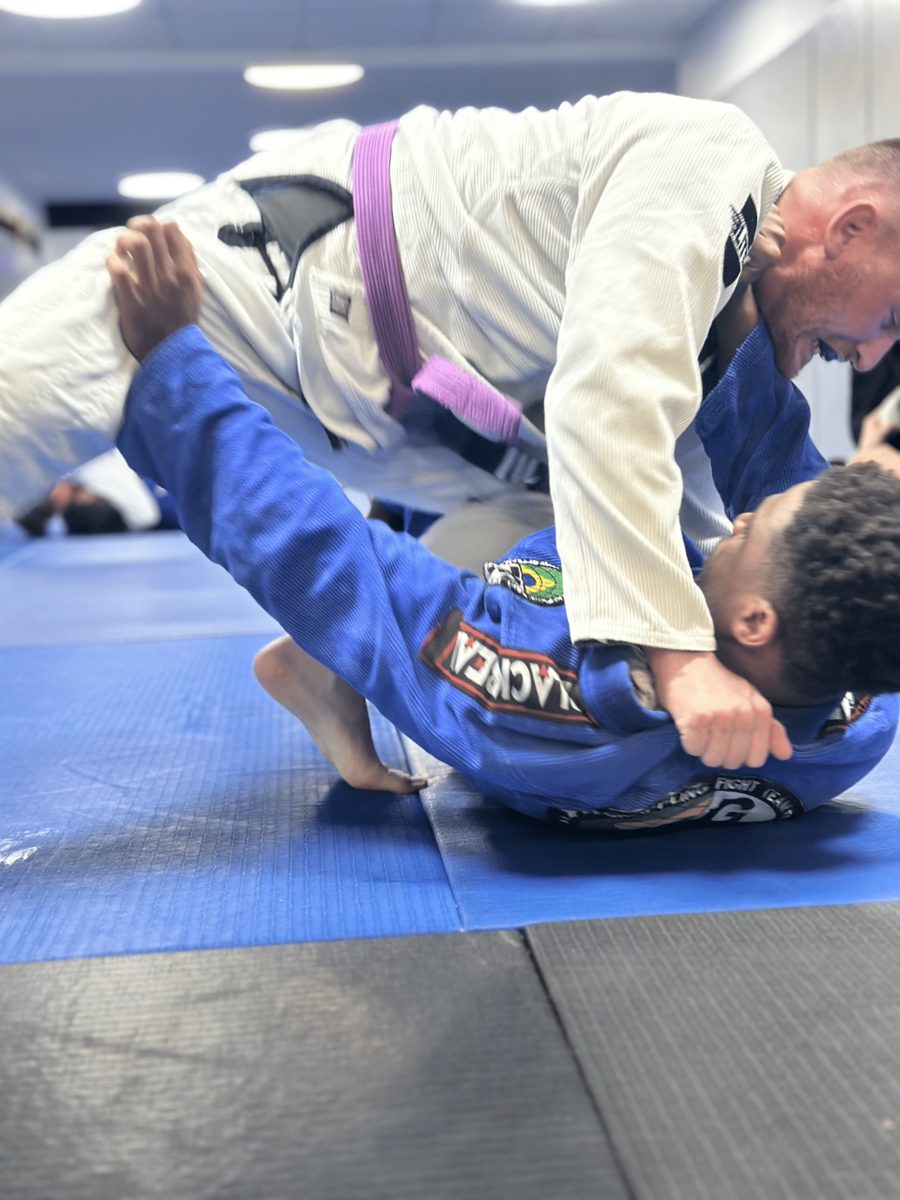
Nearly every class follows the same rhythm, which becomes a comfort: you always know what happens next. Warm-up and movement — ten minutes of mat movement: shrimping, rolls, breakfalls, the physical vocabulary of the art. Technique — the coach teaches one or two connected techniques, step by step, and you watch, ask, and try it slowly. Drilling — you practice with a partner at a controlled pace, trading repetitions while the coach circulates and corrects. Live practice (rolling) — supervised rounds against resisting partners, scaled to experience. As a beginner, rolling is optional at first — and tapping out, the universal stop signal, ends any moment instantly. Respect for the tap is absolute here.
The first month, as it actually goes
Orientation & survival
Everything is new: the positions' names, how to tap, how to breathe when someone is on top of you. Your only jobs are to show up, learn the safety basics, and get comfortable being uncomfortable. Expect real soreness — it peaks this week and fades fast.
Things start repeating
Techniques recur, and your body begins to recognize them before your brain does. You will learn a couple of escapes that actually work. Soreness becomes specific instead of total. This is the week most people quietly decide they're staying.
Timing shows up
You stop muscling everything quite so much. Drilling feels smoother, you survive a little longer in live rounds, and you start seeing the technique of the day instead of surviving it. Two to three classes a week and this week is where the compounding becomes visible.
Your first real understanding
A new student walks in, and you realize how far you've come in a month. You have a small set of moves you trust, you know the room's rhythm, and the firehose has slowed to a drinkable stream. From here, progress is steady — and it doesn't stop.
Two habits make the month go well. Train two to three times a week — enough for techniques to repeat before they evaporate, with rest days between for recovery. And recover like it's part of training, because it is: sleep, water, food, and days off are when your body actually files what the mats taught it. Sharp pain is not soreness — rest it and tell a coach.
Etiquette & gear, sorted
Clean, kind, on time
Check in at the door. Train in a clean uniform, nails trimmed, shoes off before the mats, and stay home when you're sick. Tap early, tap often, and look after your partner — you'll hear "OSS" a lot here; it means respect.
Your uniform is included
Enrollment at WDC BJJ includes a free uniform — the gi for gi classes. No-gi days call for a rash guard and shorts or leggings. Before you enroll, athletic clothes with no pockets or zippers and a water bottle are all you need.
Two formats, one art
Gi classes train in the traditional uniform, where grips on the fabric are part of the game. No-gi is faster and grip-free. Beginners do well starting with either — most students end up training both.
How starting works at WDC BJJ
We don't sell memberships online, on purpose. You start with a free trial class — a real class with the real group — and if it fits, you enroll in person at the gym, after you've met the team and trained with us. The First-Class Guide walks through that first visit in detail. Starting in the women's program? Read the Women's BJJ Guide. Bringing a teenager? The Teens BJJ Guide (Ages 13–17) is written for parents, and younger kids start with the Martial Arts for Kids Guide. Then come get your first week started — you can book a class online or call (202) 636-3453.
Your first class is free.
No experience needed, and no contracts or long-term commitment — just come train. Enrollment includes a free uniform for kids, youth, and adults.
1. Send the free-trial request or call us.
2. We confirm the right class for your age and schedule.
3. Arrive 15 minutes early in athletic clothes.
4. Train in a real group class — then decide with zero pressure.
New-student questions
Two to three classes a week is the sweet spot for most beginners: enough that techniques repeat before you forget them, spread out enough that your body recovers between sessions. Consistency beats intensity — three steady weeks teach you more than one heroic week followed by a sore, skipped one.
No. Rolling — live practice — is optional at first and always supervised. In your first weeks you will mostly drill technique with a partner at a controlled pace. When you do step into live rounds, you choose your moments, and tapping out stops everything, instantly, every time.
Honestly: the first week or two brings real muscle soreness, especially in muscles you did not know you had. That is normal, and it fades fast as your body adapts. Sleep, water, and rest days do most of the repair. Sharp pain is different from soreness — stop, and tell a coach.
People start in their 30s, 40s, and beyond, and train for years. You will not be asked to move like a 20-year-old competitor; coaches scale intensity, partners match your pace, and your goals set the program. The best time to start was years ago; the second-best time is this week.
Comfortable athletic clothes with no pockets or zippers, and a water bottle. When you enroll at WDC BJJ, your uniform (the gi) is included free, so there is nothing to buy to get started. On no-gi days, students wear a rash guard and shorts or leggings.
In person, at the gym. Membership is not sold online: you start with a free trial class, meet the team, train with the group, and — if it fits — we walk you through the options face to face and you enroll here. No payment and no obligation are attached to the trial.