What Age Should a Child Start BJJ?
Younger than most parents expect — but the honest answer depends on the child in front of you, not just the birthday behind them. Here is the age-by-age picture from a family academy.
"Is he old enough?" is one of the first questions parents ask us — sometimes about a 7-year-old who seems more than ready, sometimes about a 4-year-old who cannot yet sit still through a picture book. The truth is that Brazilian jiu-jitsu has a starting point for almost every age, but what training looks like changes completely between 4 and 14. This guide walks through each stage honestly: what a child can actually learn at that age, what a good class looks like, and how to tell whether your child is ready now or better off waiting a season. For the readiness signs themselves, our companion guide on when kids should start jiu-jitsu goes deeper.
The short answer
Most children can start BJJ between ages 4 and 5, in a fundamentals class designed for little kids. At WDC BJJ in Takoma Park, our kids program starts at age 4 and runs to age 12, and our youngest group — Little Grapplers, ages 4–6 — is built specifically for that first stage. Teenagers 13–17 train in their own group. But "can start" and "should start this month" are different questions. A ready 4-year-old will thrive; an unready one will simply have a frustrating evening and decide she hates jiu-jitsu before she ever really met it. The age matters less than the match between the child and the class format.
Ages 4–6: movement first, technique in disguise
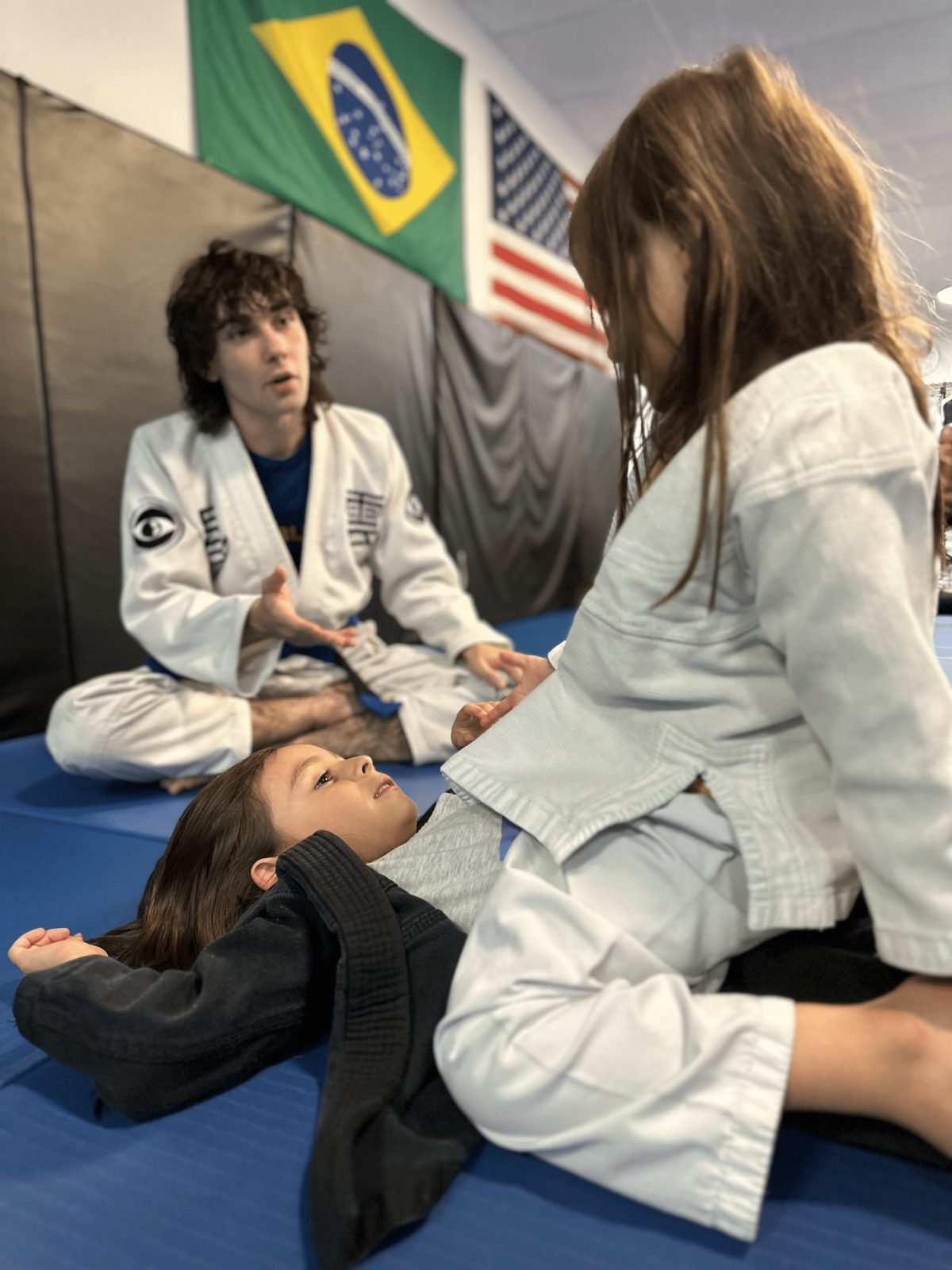
At this age, a good class looks like organized play with a purpose. Children learn to fall without getting hurt, to move on the ground — shrimping, rolling, bridging — and to follow a simple sequence with a partner their own size. Techniques arrive in small pieces, wrapped in games: hold the position, escape the pin, tag the coach's hand. Attention spans are short, so instruction comes in bursts of a minute or two, then movement again. The tap — the signal that stops everything instantly — is taught on day one, which means even the youngest students learn that they are in control of their own body and can stop any drill at any time. What a 4-to-6 class should not look like: long technical lectures, submissions applied on little joints, or sparring against much bigger children. If you visit a school and see those, keep looking. Our martial arts for kids guide explains how the age groups are structured and what parents should watch for in any program.
Ages 7–9: real technique, real partners
Somewhere around 7, most children can hold a three- or four-step sequence in mind, drill it with a partner, and start connecting positions into a game plan. This is where jiu-jitsu stops being movement class and becomes a martial art: guard, mount, side control, escapes that chain together, and the first carefully supervised live rounds against resisting partners of similar size. Kids this age also start setting their own goals — a stripe, a technique they want to land, sometimes a first competition — and coaches can teach to those goals directly. In our kids jiu-jitsu program (ages 4–12), the older half of the room trains with more detail and more responsibility, including helping newer students settle in. For many families, 7–9 is the sweet spot: old enough for real skill, young enough that starting still feels effortless.
Ages 10–12: not late — often the fastest starters
Parents of older kids ask the opposite question: "Did we miss the window?" No. A 10- or 12-year-old beginner understands instruction the first time, remembers sequences between classes, and can think strategically in a way younger children cannot. Many catch up to earlier starters within a year or two, because every class builds on actual comprehension instead of repetition alone. They train inside the same kids program through age 12, matched with partners their own size, and a beginner is never simply fed to the experienced kids — partner selection is the coach's job, and it is supervised. Late starters also bring a real advantage: they chose this. A 12-year-old who asks for jiu-jitsu practices like it.
Teenagers 13–17: their own room
Teenagers do not belong in a young kids' class, and throwing a beginner teen straight into an adult room is its own mistake. At WDC BJJ, teens 13–17 have their own group, where a first-day 14-year-old is normal, partners are teen-sized, and the training is genuinely technical — the same art the adults learn, taught at a pace and intensity right for growing bodies. It is also where the sport side opens up for those who want it, through the competition pathway. A teen who starts at 15 has years of training before adulthood and a skill that stays with them; there is no version of this where 15 is "too old."
Readiness beats birthdays
Two 5-year-olds can be a year apart in everything that matters. The signs that a child is ready now are simple: they can listen to a short instruction and try it, take turns with a partner, stay in a room without a parent for a class, and — most of all — they are curious. A child who wrestles the furniture, asks questions, and wants to try is ready, even at a young 4. A child who is miserable being separated or overwhelmed by noise may do better in six months, and waiting costs nothing. Nobody at a good school will pressure you either way, because a child who starts happy stays.
The honest way to decide: one real class
You do not have to guess. At WDC BJJ, the first class is free — a real group class with your child's own age group, in athletic clothes, no uniform, payment, or contract needed. Come watch from the side, see how your child responds to the room, the coach, and the other kids, and let that answer the question. Most parents know within twenty minutes. Book a free class and find out which age your child actually is.
Your first class is free.
A real group class with your own group. No experience needed, no payment, no contract for a trial — and enrollment includes a free uniform.
1. Send the free-trial request or call (202) 636-3453.
2. We confirm the right class for your age and schedule.
3. Arrive 15 minutes early in athletic clothes with water.
4. Train a real class — then decide with zero pressure.
Starting age, answered
At WDC BJJ, children start at age 4 in Little Grapplers, our class for ages 4–6, and many academies begin somewhere between 4 and 5. Before that age, most children are still building the listening, balance, and turn-taking that even a play-based class needs. If your child is almost 4, the honest test is a free trial class — you will know within twenty minutes whether they are ready.
Not if the class is built for 4-year-olds. A good class at this age looks like structured play: falling safely, moving like the animals in the warm-up, short games built around real positions, and very short technique pieces with a partner the same size. It should not look like an adult class shrunk down. If a school puts a 4-year-old into long technical drilling or live sparring with bigger kids, that school — not the age — is the problem.
Not at all. Children who start at 10–12 often progress faster than younger beginners because they understand instruction, remember sequences, and can start learning real strategy right away. They join the kids program (ages 4–12 at WDC BJJ), train with partners their own size, and are not thrown in against children who have trained since they were 5 without supervision. Plenty of strong competitors started at 11 or 12.
Then you wait a few months and try again — it costs nothing at WDC BJJ, where the first class is free. Readiness changes fast at these ages. A child who could not sit through a warm-up in September may be a different child by spring. There is no deadline and no penalty for starting at 5½ instead of 4.
At WDC BJJ, teens ages 13–17 train in their own group — not with young children and not thrown in with adults on day one. It is the right bridge: partners their own size and maturity, real technique, and a room where a beginner teenager is the rule rather than the exception. From there, older and more experienced teens can also visit adult classes when their coach says they are ready.