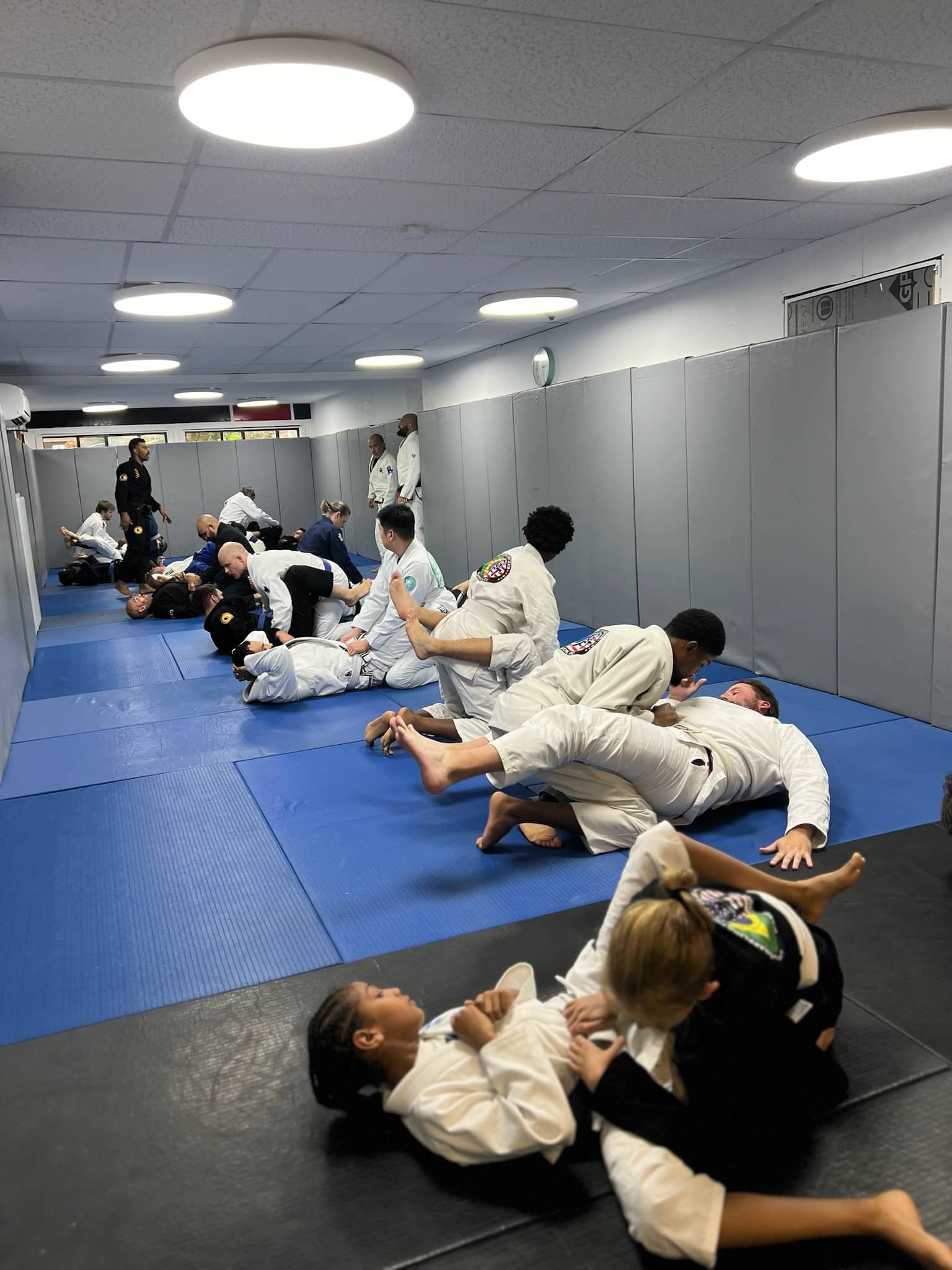
How Long to a Black Belt in BJJ?
Around ten years for most adults who train consistently. Here is the honest math behind the belts — and why the long road is the point.
Every beginner asks it, usually in the first week: how long until black belt? Jiu-jitsu has a reputation for giving an honest answer, so here it is — for most adults who train consistently, a black belt takes around ten years. Some take eight. Plenty take twelve or fifteen, with jobs, kids, and life in between. Almost nobody legitimately takes five. If a school promises you a fast black belt, that tells you something about the school, not about the belt.
The belts, in order
Adults climb five belts: white, blue, purple, brown, and black. Between each belt are four stripes — small pieces of tape on the end of the belt that mark the road in pieces small enough to feel. Each belt is measured in years, not months. Blue commonly takes around two years of steady training. Purple and brown are the long belts, where students spend years deepening their game — a stretch we look at in Purple, Brown, Black: The Long Belts of Jiu-Jitsu. Our belt journey page lays out the whole ladder.
Why the pace differs
The biggest variable is simply consistency. A student training three times a week accumulates mat hours at triple the rate of a once-a-week student, and belts follow hours more than calendars. Prior grappling experience matters too — a former wrestler's white belt is not a true beginner's white belt. And promotions at WDC BJJ are decided by the coaches on attendance, attitude, and skill. There is no exam to book and no fee to pay; a belt arrives when it has been earned, which is why it means something when it does. The first leg of the road is its own story — see White Belt to Blue Belt for what that journey actually takes.
Kids are on a different ladder
Parents ask the same question about their children, and the answer is different: kids do not climb the adult belts. Children progress through their own belt colors — gray, yellow, orange, and green families, each with stripes — as we explain in Kids' Belts and Stripes. The adult ladder begins in the teen years, so a child who starts at five has a long, full childhood of jiu-jitsu ahead before the adult belts even begin. That is by design: a black belt is an adult achievement, and the kids' system gives young students years of real milestones on the way there.
Why it takes that long — and why that is the point
Jiu-jitsu is genuinely deep. Every position branches into dozens of situations, and the knowledge only settles through thousands of live repetitions against resisting partners. Ten years is not a queue; it is roughly how long that settling takes. And most students find, somewhere around blue or purple belt, that the question changes. The stripes stop being a countdown and start being a record — of the mornings, the hard rounds, the training partners who became friends. The black belt certifies the journey. It was never a shortcut around it.
Wherever the road starts, it starts the same way: one class. Your first class is free at WDC BJJ in Takoma Park — for adults, teens, and kids ages 4–12. Book a class and put your first hour on the clock.
Your first class is free.
A real group class with your own group. No experience needed, no payment, no contract for a trial — and enrollment includes a free uniform.
1. Send the free-trial request or call (202) 636-3453.
2. We confirm the right class for your age and schedule.
3. Arrive 15 minutes early in athletic clothes with water.
4. Train a real class — then decide with zero pressure.